
Engagement Types
Clarity before commitment.
Every engagement starts with the same question: what actually needs to happen, and in what order.
Some need a design leader in the room for months. Some need a defined piece of work delivered and handed off. Either way, the fastest way to find the right shape isn't a proposal. It's a real look at where things stand, whether that's a concept, a hypothesis, or a product already in market.
Design leadership stitched into your team's daily rhythm
I join your standups, your Slack channels, and your strategy sessions. You get a senior design voice at the table without the full-time overhead.

A finished piece of work delivered against a clear brief
You define the outcome, I define the work. A redesign, a new feature, a design system. I handle it from first sketch to final handoff.
Product architecture audit
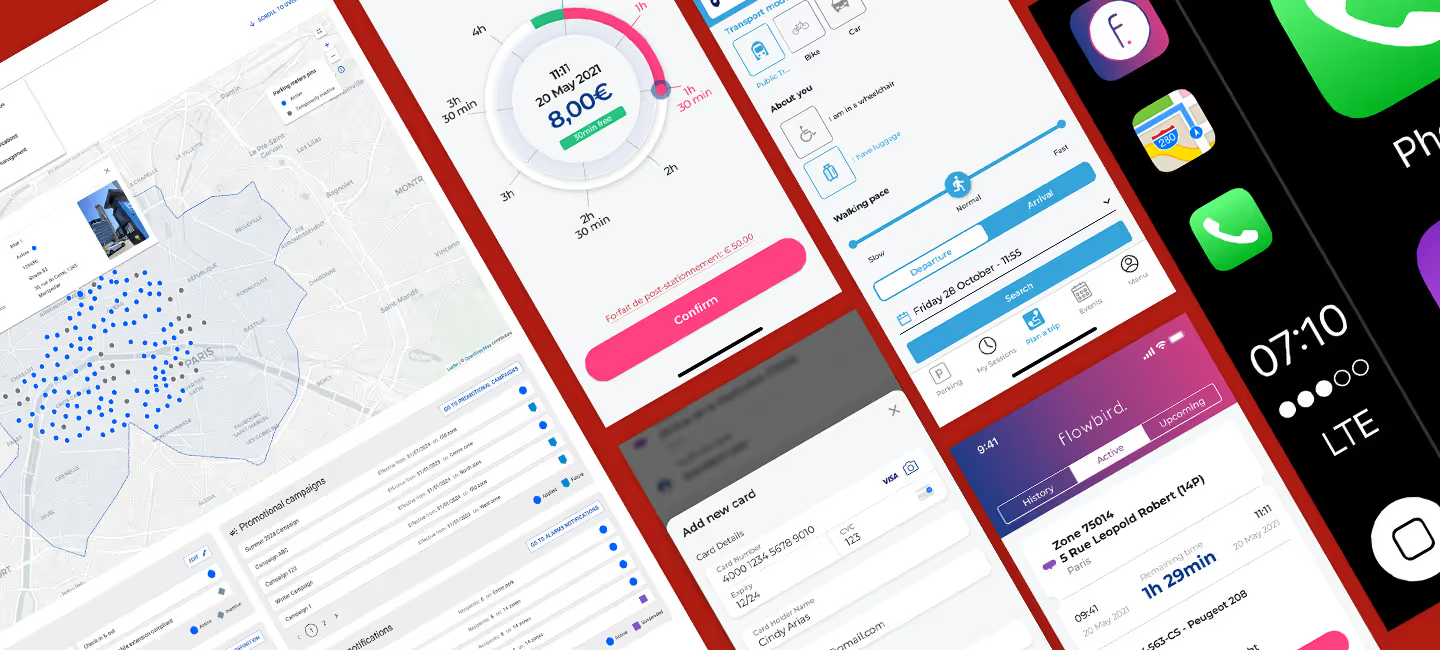
A fixed-scope, fixed-price look at where things actually stand, whether that means auditing an existing product's architecture or mapping the strategy a new concept needs.
Typically two to four weeks, scoped to the work.
You leave with a clear picture of what's working, what isn't, and what to do next, whether that's with me or not.

One flat scope, one flat price.
No junior staff and no account management layers
You hire me, you get me. Every wireframe, every review, every hard conversation. The person you talk to is the person doing the work.
Both options run on two rates, leadership and execution, because those are different kinds of work even when the same person is doing both.
Pricing is straightforward and discussed directly once the shape of the engagement is clear.
.avif)
FAQs
Straight answers to the questions I hear most often about how I work.
Two rates, leadership and execution, scoped to the actual work rather than sold as a package. The shape of the engagement gets settled first and pricing follows from it.
There isn't one. There are engagements that make sense for both of us and engagements that don't, and that's usually clear early.
Sometimes. I'm in Austin, so on-site is easy locally, and I'll travel short-term when it earns the trip. Most of the work happens where your team already works.
Yes, and I keep designing while I do it. At Flowbird I built the design team, led it, and set the process and rhythms it ran on. At Euvic I took the hardest work myself and directed a supporting designer alongside it.
It usually does. When yours changes, mine changes with it. Scope moving is the normal condition of product work, not an exception that needs renegotiating from scratch.
The first conversation is about the work.
We'll spend it understanding where you are, what you're trying to achieve, and which way of working will help you get there.